United States
 Australia
 United Kingdom
 Singapore
 Malaysia
 Thailand
 Indonesia


Episode 25: How Do You Know You’ve Got the Wrong Creator Marketing Partner?
Choosing a creator marketing partner is becoming more complicated as the category grows. In this episode, the team explores four warning signs marketers should look for, from hidden fees and questionable technology claims to organic-only strategies and creator recommendations shaped by who a partner happens to represent.
In Episode 25 of Influencing Outcomes, Nathan Powell is joined by Eliza Lewis and Ben Gunn to explore a simple question: how do you know when you've got the wrong creator marketing partner?
As creator marketing has grown, so too has the ecosystem surrounding it. Brands can now choose between talent agencies, creator agencies, technology platforms, media agencies, specialist marketplaces and countless combinations of each. But while the category has become more sophisticated, not every solution has evolved at the same pace.
The team explores four areas marketers should interrogate when choosing a partner: transparency, technology, paid amplification and creator selection.
The common thread is simple. There isn't necessarily one right way to do creator marketing, but marketers should understand why their partner is recommending a particular strategy, creator or technology, where their money is going and how success will ultimately be measured.
Transparency Isn't About Paying Less. It's About Knowing What You're Paying For
Creator marketing has a complicated supply chain.
A single campaign can involve creators, talent managers, creator agencies, media agencies, technology platforms, paid media and measurement partners. Every participant can add legitimate value, and every participant needs to be compensated for the role they play. The problem begins when marketers can't see where those costs sit.
Unlike traditional media, creator marketing doesn't have a universal rate card. Two creators with similar follower counts can charge dramatically different amounts, making it difficult for marketers to establish benchmarks and creating opportunities for additional margins to disappear inside talent fees or other campaign costs.
That doesn't mean margins themselves are a problem. If a partner is providing strategy, technology, campaign management, measurement or assuming responsibility for delivering an outcome, there is legitimate value being created. The warning sign is when marketers don't understand who is sitting within the supply chain, what they're contributing and how they're being compensated.
For brands, greater transparency also creates something increasingly valuable: better data. Understanding actual creator costs makes it possible to build meaningful benchmarks over time and make smarter decisions about where future budgets should be invested.
Not Everyone Selling Technology Is a Technology Company
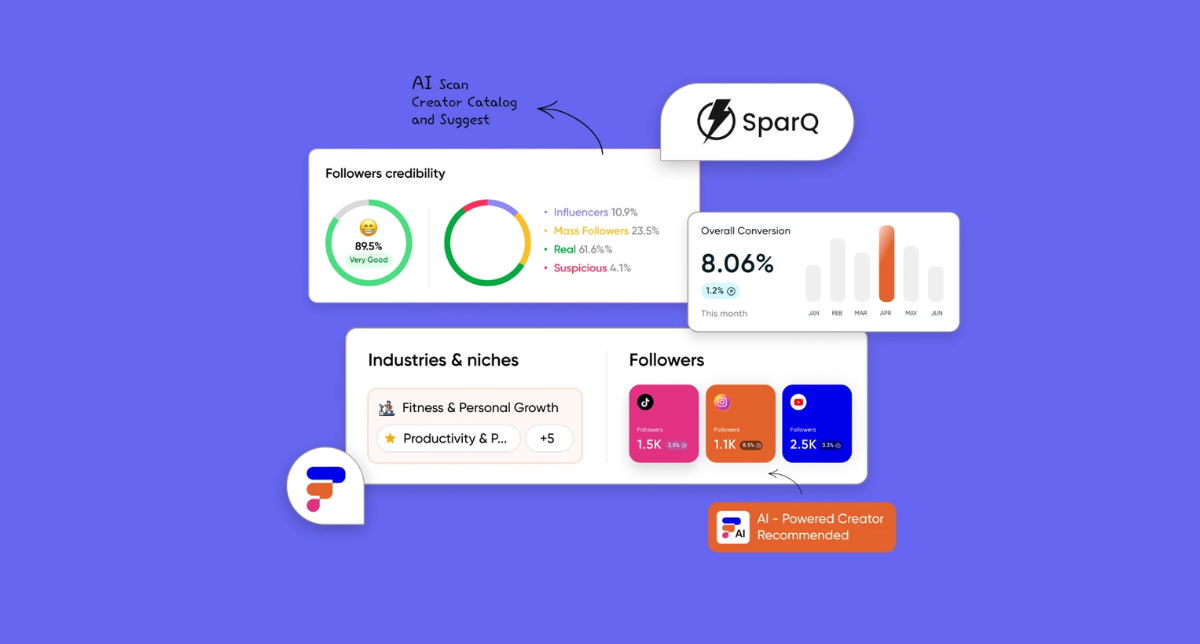
Technology has become almost impossible to separate from modern creator marketing, which means almost every business in the category now describes itself as having some form of proprietary technology or AI capability.
Marketers should be prepared to interrogate those claims. There is an important difference between a company that has built technology and one that uses somebody else's technology as part of its service. Neither model is inherently wrong, but brands should understand what they're actually buying.
The distinction becomes particularly important as creator programs become more sophisticated.
Running an individual campaign may not require deep technology integration. Building an always-on creator program that stores campaign data, becomes smarter over time and connects into an enterprise technology stack is a very different proposition.
The same scrutiny should apply to AI. Adding an AI-powered label to a product doesn't explain what the technology actually does. Marketers should understand which parts of the workflow are being powered by AI, what models or technology sit underneath the solution and whether the capability creates genuine value that couldn't easily be replicated with an off-the-shelf tool.
The further you scratch beneath the surface, the easier it becomes to distinguish genuine capability from a technology claim sitting in a pitch deck.
Organic-Only Creator Strategies Should Be a Red Flag
Creator content can generate enormous organic reach, but relying on organic distribution alone leaves too much of a campaign's performance to chance.
The team compares it to producing a television commercial and then deciding not to buy any media. Paid amplification allows brands to take creator content and deliberately put it in front of the audiences they want to reach, while giving platforms more signals to optimise against the outcomes that matter.
That doesn't mean every piece of creator content should receive the same media budget. Instead, the episode argues for getting content into market quickly, putting initial paid support behind the assets and allowing performance data to determine where additional budget should flow. Rather than trying to predict the winner before launch, brands can let the strongest assets emerge and then increase investment behind them.
Importantly, the content that performs best organically isn't necessarily the content that will become the strongest paid advertising asset.
A video can generate millions of views because it's entertaining without necessarily building meaningful brand association or driving a commercial outcome. If audiences watch seven seconds of a video but the brand doesn't appear until much later, impressive organic numbers may tell only part of the story.
For marketers, that means creator content needs to be evaluated against the job it was actually created to do.
Ask Why This Creator Is Being Recommended
Creator selection is another area where the incentives of a partner can quietly shape the strategy being recommended.
A talent agency will naturally know its own roster best. A nano creator marketplace will naturally have a strong view on the value of nano creators. A specialist network will understandably recommend the creators available within its ecosystem. None of that is inherently problematic.
The question marketers should ask is whether the creator is being recommended because they're genuinely the best person to achieve the campaign objective, or because they're the creator the partner has available to sell. The same applies to the industry's obsession with creator tiers. There is no universally "best" creator size. A creator who is brilliant at selling a product may be completely different from someone who excels at education, entertainment or broad awareness. The right choice depends on the objective.
Algorithms have made follower count even less useful as a proxy for influence. Creators no longer need enormous established audiences to achieve significant distribution, which makes metrics such as content quality, audience relevance, watch time and demonstrated performance increasingly important.
Instead of asking only, "Why is this creator right for my campaign?", marketers should ask a second question: Why is this particular business recommending this creator to me?
The Best Partners Should Welcome More Questions
There isn't one universally correct model for creator marketing.
Different brands need different combinations of strategy, technology, creators, media and measurement. A partner charging a margin isn't automatically a problem. A talent agency recommending its own creators isn't automatically a problem. A business using third-party technology isn't automatically a problem either.
The warning sign is when those things aren't clear. Marketers should understand how their partner makes money, what technology actually sits behind the solution, why particular creators are being recommended, how content will be distributed and how the campaign will ultimately prove whether it worked.
Because perhaps the biggest red flag is when the answer to every brief somehow happens to be whatever your partner already sells.
The creator marketing category is becoming more sophisticated, and the questions marketers ask of their partners should evolve with it.
Follow, Subscribe and Stay Connected
Enjoyed the episode? Follow Influencing Outcomes on your favourite podcast platform so you never miss an update.
For more insights, industry trends and behind-the-scenes content:
Follow Fabulate on socials: LinkedIn | Instagram | TikTok | YouTube | Facebook

.jpg)

.png)
.png)
.jpg)





.jpg)
.jpg)
.jpg)
.jpg)

.jpg)


.jpg)










.png)
.png)
















.png)
.png)
.png)

.png)
.png)
.png)
.png)
.png)
.png)
.png)
.png)
.png)
.png)
.png)

.png)
.png)


.png)
.png)