United States
 Australia
 United Kingdom
 Singapore
 Malaysia
 Thailand
 Indonesia


.jpg)
From feeds to answers: How creators are shaping AI discovery
AI is changing product discovery from ranked links and social feeds into synthesised answers. Here’s how creator content can influence what AI systems understand, surface and recommend about brands.
From feeds to answers: How creators are shaping AI discovery
AI is transforming product discovery from a list of links into a shortlist of answers. That gives creator content a new role, but it also creates a new visibility gap for brands to understand.
For years, creators have learned how to work with social algorithms. They understood the formats that travelled, the hooks that held attention and the signals that helped content reach the For You page.
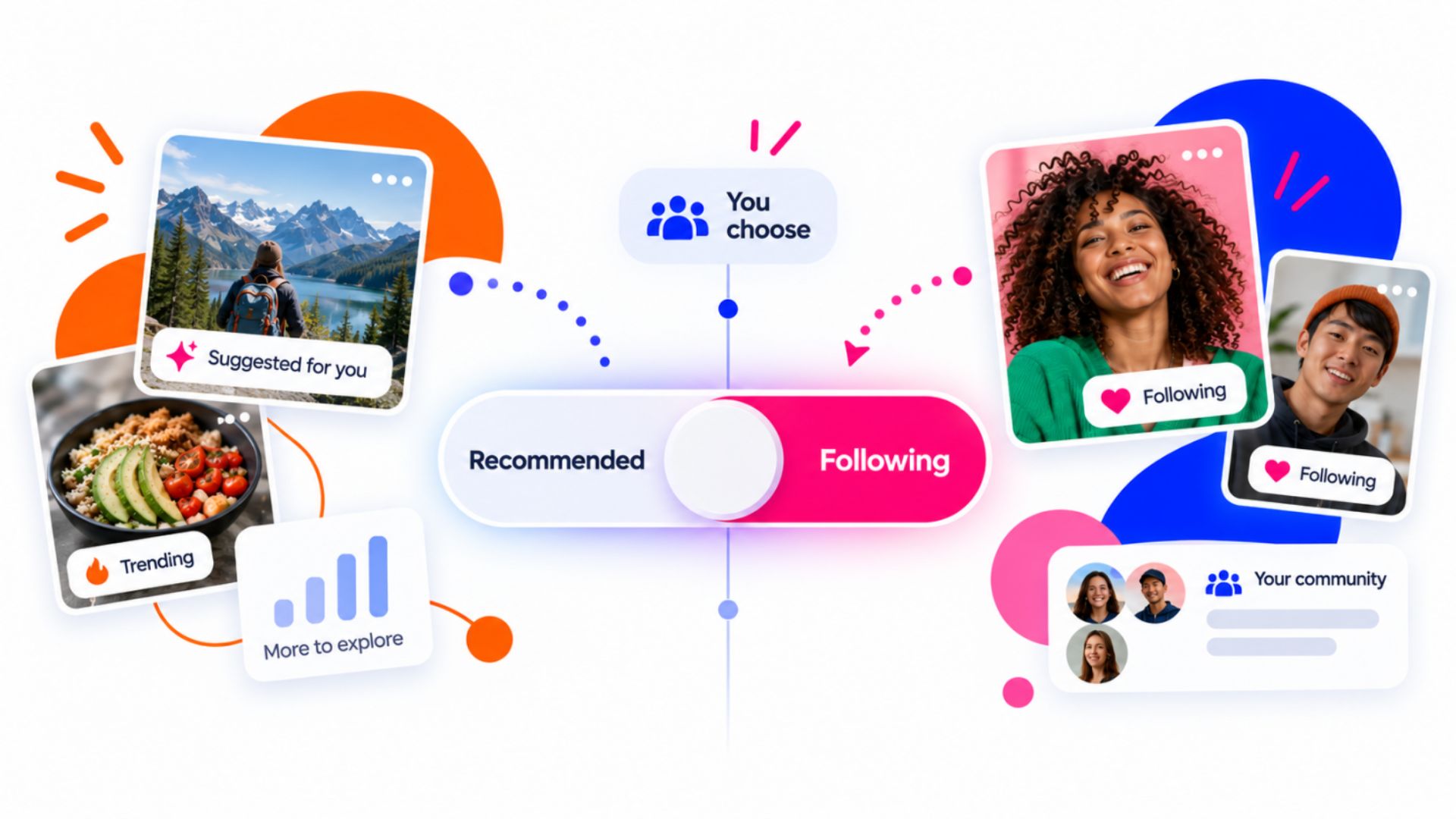
Now another discovery system is becoming increasingly important. Consumers are asking AI tools what to buy, while marketers are using AI to research categories, creators and potential partners. Instead of serving a feed or a page of search results, these tools can interpret a question and return a shortlist of recommendations.
That shift gives creator content a role beyond the feed. Reviews, demonstrations, comparisons and recommendations published by creators can become part of the wider information environment AI systems use to answer questions about brands and products.
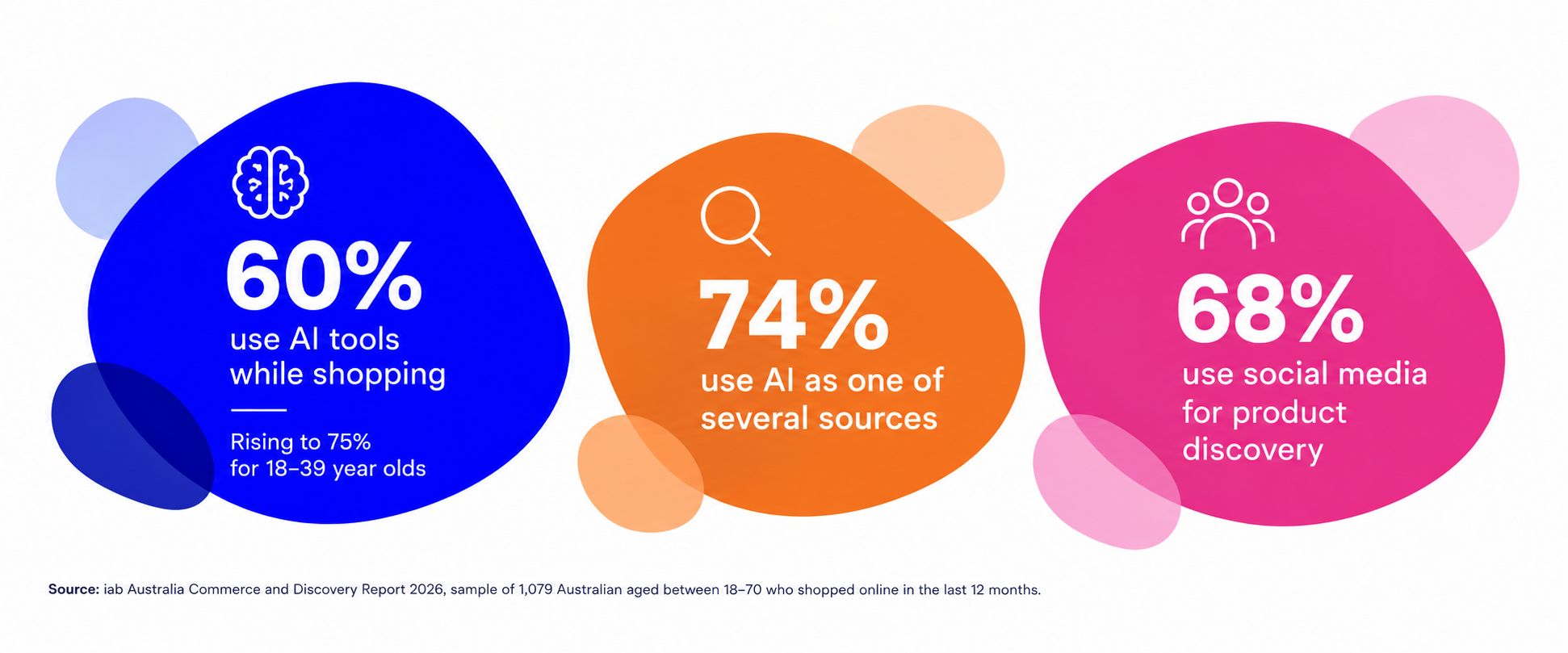
That behaviour is already visible in Australia. According to the 2026 IAB Australia and Pureprofile Commerce & Discovery Report, 60% of Australian online shoppers use AI-powered tools at least sometimes while shopping, rising to 75% among 18 to 39-year-olds. Yet 74% use AI as one of several sources rather than their only source, while 68% use social media to discover, research or compare products and brands.
The pattern also builds on Fabulate’s recent analysis of how creators influence Australian shoppers, which found creator content is already embedded across discovery and consideration.
Discovery is not moving neatly from one channel to another. AI, search, social media and creator content are increasingly becoming part of the same research journey.
The shift is also changing search behaviour. Pew Research Center analysed 68,879 Google searches and found users clicked a traditional search result in 8% of visits when an AI summary appeared, compared with 15% when one did not. The study covered U.S. adults and Google searches in March 2025, so it is directional rather than a measure of Australian shopping behaviour.
TL;DR: Discovery channels aren't replacing each other, they're becoming part of the same journey. That changes how you measure creator value.
Creator Content Is Becoming Brand Proof
AI-powered discovery depends on the information available to it. Product pages, publisher coverage, reviews, community discussions and accessible creator content can all provide signals about what a brand offers, who it is relevant to and how people experience its products.
Creator reviews, demonstrations and comparisons can be particularly useful because they provide something traditional product information often cannot: context.
They show how something works in real life, who it suits, how it compares with alternatives and what someone with relevant experience thinks about it. Tutorials and audience conversations can also capture the questions consumers ask and the language communities use.
That gives useful creator content a potentially longer life. A partnership may generate reach during a campaign, then remain discoverable as part of the wider body of information surrounding the brand.
That creates a new measurement question for marketers: will AI recommend your brand? Creator content can increasingly sit alongside product pages, reviews and publisher coverage as part of the evidence surrounding a brand.
Fabulate's existing Australian research points in the same direction. Among consumers across five markets who had recently used AI for shopping research, 55% preferred AI recommendations that included creator reviews, while 64% said recommendations grounded in credible creator perspectives would increase their confidence.
TL;DR: The content that teaches (not just promotes) gets discovered by both people and machines.
Visibility Is Not the Same as Influence
There is an important catch. AI does not necessarily have an even view of the creator economy.
Fabulate Chief Product and Strategy Officer Nathan Powell describes this emerging dimension as “machine-readable authority”.
A niche technology creator with detailed YouTube reviews, podcast appearances, transcripts and publisher coverage may leave a stronger trail of accessible information than a much larger creator whose influence sits primarily within a single platform.
That does not necessarily make the first creator more influential. It may simply make their authority easier for a particular AI system to identify.
The distinction becomes especially important across Asia, where discovery and commerce can happen inside platforms such as Xiaohongshu, Douyin, WeChat, Shopee and TikTok Shop. The information available to general-purpose AI systems may not represent everything happening inside these ecosystems.
That creates a potential visibility gap. A creator may have genuine cultural authority, an engaged community and significant influence over purchasing behaviour while remaining comparatively difficult for an external AI system to understand.
The risk, then, is not simply using AI for creator discovery. It is treating an AI-generated view of the creator economy as complete when the underlying information may not be.
That is why AI-assisted creator discovery needs creator-specific data and context rather than relying only on a general-purpose model.
TL;DR: Platform-specific authority can create blind spots for AI, making reach invisible even when it's real.
What Brands Should Do Now
The answer is not to reshape every creator brief around pleasing a machine.
Creator content still has to earn attention and trust from people first. If every post becomes an exercise in optimisation, brands risk removing the personality, creativity and cultural relevance that made creator content valuable in the first place.
Instead, brands should consider how genuine creator authority becomes understandable beyond a single post.
That can mean investing in useful demonstrations, comparisons, tutorials and answers to common questions, supported where appropriate by clear titles, captions, descriptions and transcripts.
It also means thinking beyond a single platform. A creator's authority may be expressed through video, social posts, podcasts, publisher coverage, community conversations and other formats. Together, those signals can provide a richer picture of their expertise and relevance.
The broader challenge is understanding how AI is changing creator marketing without losing the human judgement, trust and cultural understanding that make the channel work.
Measurement will need to expand as well.
Reach, views and engagement remain important, but marketers can increasingly ask another set of questions: Does the brand appear in relevant AI answers? How is it described? Which sources are being cited or surfaced? Which competitors appear alongside it? And does the picture presented by AI reflect what the brand actually wants to be known for?
Those signals should inform creator strategy, not replace it. Verified audience data, cultural understanding, brand fit and human judgement remain essential, particularly when the AI view of a market or creator may be incomplete.
TL;DR: Your multi-format digital footprint becomes your currency. Measure beyond reach: Check if AI recommends you, how you're described, and which competitors appear alongside you.
The Next Discovery Advantage
Creators spent the past decade learning how to become discoverable to platforms.
The next opportunity is making genuine expertise easier for both people and machines to understand without flattening the humanity that earned audiences' attention in the first place.
Creator marketing is becoming more than a way for brands to enter the feed. Useful creator content can contribute to the public evidence surrounding a brand, helping people, search engines and AI-powered discovery systems understand where it fits.
The advantage will not come from creating content for machines at the expense of people.
It will come from investing in credible creators, useful ideas and a digital footprint strong enough to be recognised wherever the next discovery begins.
TL;DR: Build for people. Make it findable for machines.
.png)
.png)
.jpg)


.jpg)
.jpg)
.jpg)
.jpg)
.jpg)


.jpg)








.png)
.png)














.png)
.png)
.png)

.png)
.png)
.png)
.png)
.png)
.png)
.png)
.png)
.png)
.png)
.png)
.png)
.png)



.png)
.png)